How I Funded My Exchange Year Without Breaking the Bank
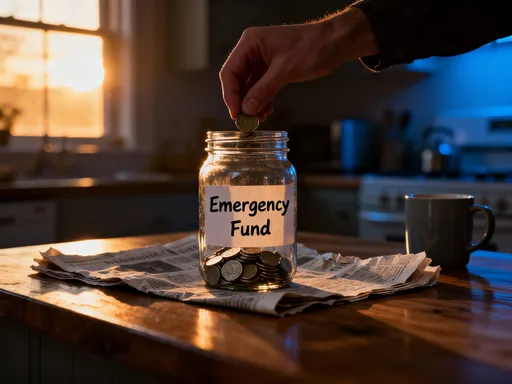
Studying abroad sounded expensive—until I realized it didn’t have to drain my savings. As a beginner with zero investing experience, I started small, using simple tools that actually worked. I made mistakes, yes, but I also found ways to grow money while planning my exchange program. This is how I turned spare change into travel funds—smart, safe, and step by step—without risking what I couldn’t afford to lose.
The Reality Check: Why Exchange Programs Cost More Than You Think
When most students dream of studying abroad, they imagine new cities, exciting classrooms, and vibrant cultural experiences. What often gets overlooked is the full financial scope of such an adventure. It’s not just about tuition and airfare—those are only the starting points. The real cost of an exchange program unfolds in layers, many of which aren’t immediately visible. Visas, international health insurance, housing deposits, local transportation, groceries, and even SIM cards add up quickly. A round-trip flight to Europe might cost $1,200, but once there, daily expenses can easily reach $60 to $100 depending on the city. Multiply that over four or five months, and the total begins to climb well beyond initial estimates.
Consider a student from the Midwest planning a semester in Barcelona. She budgets $3,000 for tuition, $1,500 for flights, and assumes $1,000 will cover everything else. But then she learns the visa requires a bank statement showing $5,000 in available funds. Her health insurance, not covered by her university plan, costs $300. Rent for her first month is due before arrival. Add in textbooks, a local phone plan, and basic household supplies, and she’s already facing an unexpected shortfall of over $2,000. This scenario is common, not exceptional. Many students discover too late that their savings are insufficient, forcing them to delay their plans, take on debt, or abandon the opportunity altogether.
The truth is, personal savings alone are rarely enough to cover the full cost of studying abroad, especially when unexpected expenses arise. That’s why forward-thinking financial preparation is essential. Waiting until the last minute to fund an exchange program often leads to poor financial decisions—like relying on high-interest credit cards or borrowing from family. A better approach is to start early and use tools that allow money to grow over time. This doesn’t mean becoming a Wall Street trader or taking big risks. It means understanding that even small, consistent actions today can significantly impact your financial readiness tomorrow. The goal isn’t to get rich quickly, but to build a realistic, sustainable path to funding your dream without compromising your financial stability.
Starting Small: My First Steps Into Beginner-Friendly Investing
I didn’t grow up talking about stocks or mutual funds. My family treated money as something to be saved, not invested. So when I first considered funding my exchange year through investing, I felt completely out of my depth. The idea of putting money into something that could lose value was terrifying. I worried about making the wrong choice, losing everything, or being taken advantage of by complex financial systems I didn’t understand. Like many beginners, I assumed investing was only for people with large amounts of money or specialized knowledge. But after calculating the true cost of my exchange program and realizing my savings wouldn’t stretch far enough, I knew I had to explore other options.
The turning point came when I spoke with a financial counselor at my university. She explained that investing isn’t just about stocks and high-risk bets—it includes a range of tools designed for different goals and comfort levels. For someone like me, with a clear timeline and a modest budget, the focus should be on low-risk, accessible options that grow steadily over time. She emphasized that starting small was not only acceptable but often smarter. A $25 monthly investment, she explained, could grow meaningfully over 12 to 18 months with the right strategy. That conversation shifted my mindset. I realized I didn’t need to be an expert to begin. I just needed to take the first step with intention and caution.
My first move was opening a high-yield savings account linked to my checking account. It wasn’t flashy, but it was safe, easy to understand, and offered better interest than a traditional bank. From there, I began researching index funds—passively managed portfolios that track market averages. I learned they historically provide steady returns over time with minimal effort. I also explored robo-advisors, digital platforms that automatically invest money based on your goals and risk tolerance. These tools were designed for people like me: beginners who wanted to participate in wealth-building without spending hours analyzing markets. The key was starting with what felt manageable, learning as I went, and avoiding the pressure to do everything at once. Over time, that small beginning became the foundation of a smarter financial plan.
Tools That Actually Work: Low-Risk Investment Options for Students
One of the biggest misconceptions about investing is that it requires large sums of money or risky gambles. In reality, there are several low-barrier, low-risk tools that can help students grow their exchange funds responsibly. These aren’t get-rich-quick schemes; they’re practical, accessible methods designed to build wealth gradually. The most effective ones combine safety, simplicity, and consistency—qualities that align perfectly with the needs of a student planning for a specific financial goal.
A high-yield savings account is often the best starting point. Unlike traditional savings accounts that offer minimal interest, high-yield versions are typically offered by online banks and can provide annual percentage yields (APY) of 3% to 5%, depending on market conditions. This means a $1,000 deposit could earn $30 to $50 in a year without any risk to the principal. For a student with a 12-month timeline, this is a safe way to let money work while keeping it easily accessible. These accounts are FDIC-insured, meaning deposits are protected up to $250,000, so there’s no risk of loss due to market fluctuations.
Another powerful option is the index fund. An index fund is a type of mutual fund or exchange-traded fund (ETF) that tracks a broad market index, such as the S&P 500. Instead of trying to beat the market by picking individual stocks, index funds aim to match its performance. Historically, the S&P 500 has returned an average of about 7% to 10% per year over the long term. While past performance doesn’t guarantee future results, this steady growth makes index funds a reliable choice for long-term goals. Many brokerage platforms allow students to start investing in index funds with as little as $1, making them highly accessible.
Robo-advisors are another excellent tool for beginners. Services like Betterment or Wealthfront use algorithms to build and manage a diversified portfolio based on your timeline and risk tolerance. You answer a few questions, link your bank account, and the platform handles the rest. These services typically charge low fees, often less than 0.25% per year, and automatically rebalance your investments to maintain the right mix of assets. For a student who wants to invest but doesn’t have time or expertise to manage a portfolio, a robo-advisor offers a hands-off yet effective solution.
Peer-to-peer lending platforms, such as LendingClub or Prosper, allow individuals to lend small amounts of money to borrowers in exchange for interest. While slightly riskier than savings accounts or index funds, these platforms offer the potential for higher returns, typically in the 5% to 8% range. The key is to diversify by lending small amounts to many borrowers, reducing the impact if one defaults. For students willing to accept a bit more risk for slightly higher gains, this can be a useful addition to a balanced strategy.
Growing Money While You Study: Balancing Risk and Return
One of the most important principles in investing is balancing risk and return. The goal isn’t to eliminate risk entirely—that’s impossible if you want any growth—but to manage it wisely. For a student funding an exchange program, the timeline is usually fixed: you need the money in 12 to 18 months. This means your investment strategy should prioritize capital preservation while still allowing for moderate growth. Putting all your money into high-risk stocks might offer big returns, but it also carries the danger of losing funds right when you need them. A smarter approach is to build a simple, diversified portfolio that aligns with your time horizon and financial goals.
Diversification is the practice of spreading your money across different types of investments to reduce exposure to any single risk. For example, instead of putting $2,000 into one stock, you might divide it among a high-yield savings account, an index fund, and a robo-advisor portfolio. If one investment underperforms, the others may offset the loss. This doesn’t guarantee profits or prevent losses, but it helps smooth out volatility. Think of it like packing multiple types of clothing for a trip—you wouldn’t bring only swimsuits if you were going to a place with changing weather. Similarly, your financial portfolio should be prepared for different economic conditions.
Time horizon is another critical factor. The longer you can leave your money invested, the more risk you can generally afford to take. Since most exchange programs are planned at least a year in advance, students have a moderate time horizon—long enough for some growth, but not so long that they can ignore short-term fluctuations. A good rule of thumb is to keep funds needed within the next 12 months in safer vehicles like high-yield savings accounts or short-term CDs. Money that won’t be needed for 18 to 24 months can be allocated to slightly riskier but higher-return options like index funds.
Emotional discipline is just as important as financial strategy. Markets go up and down, and it’s easy to panic when you see your account value drop. But reacting emotionally—selling during a downturn or chasing a hot stock—often leads to poor decisions. Instead, successful investors stay focused on their long-term goals and avoid making impulsive changes. Setting up automatic contributions and reviewing your portfolio quarterly can help maintain this discipline. The goal isn’t to time the market, but to stay in it consistently, allowing compound growth to work in your favor.
From Spare Change to Study Abroad Funds: Automating the Process
One of the most effective ways to build savings for an exchange program is automation. Relying on willpower alone to save money is often ineffective—life gets busy, unexpected expenses arise, and it’s easy to put off setting aside funds. But when you automate the process, you remove the need for constant decision-making. Small, consistent contributions add up over time, often without you even noticing. This is where micro-investing apps and automatic transfers become powerful tools.
Micro-investing apps like Acorns or Stash allow users to invest spare change from everyday purchases. For example, if you buy a coffee for $3.75, the app can “round up” the purchase to $4.00 and invest the $0.25 difference. These small amounts accumulate quickly. Over a month, rounding up daily purchases could add $10 to $20 to your investment account. While that might not seem like much, over 12 months it becomes $120 to $240—enough to cover a flight upgrade or a weekend trip during your exchange. The beauty of this system is that it makes investing feel effortless and painless.
Even more effective is setting up automatic monthly transfers from your checking account to your investment or savings account. You can schedule $50, $100, or whatever amount fits your budget to move automatically on payday. This “pay yourself first” approach ensures that saving and investing become a priority, not an afterthought. Over time, these regular contributions benefit from compound interest—earning returns not just on your original deposits, but on the growth of those deposits as well. For example, investing $100 per month at a 6% annual return would grow to over $1,230 in one year, including interest.
The key is consistency. It’s better to invest a small amount regularly than to wait for a large sum to appear. Automating the process removes temptation and builds a habit that supports long-term financial health. You don’t need a perfect budget or a high income to make this work. What matters is starting early, staying consistent, and letting time do the heavy lifting. By the time your exchange program begins, you’ll have a meaningful sum that you might not have thought possible.
Common Traps and How to Avoid Them
Beginner investors often fall into predictable traps that can derail their progress. One of the most common is chasing trends. When a particular stock or cryptocurrency surges in value, it’s tempting to jump in, hoping to catch the wave. But by the time most people hear about a “sure thing,” the peak may already have passed. Buying high and selling low is a recipe for losses, not gains. Instead of following the crowd, it’s better to stick to a disciplined strategy based on your goals and timeline.
Another trap is falling for “get rich quick” schemes. These often promise high returns with little risk, but they rarely deliver. Whether it’s a mysterious investment opportunity shared in a social media group or a friend’s “guaranteed” tip, these offers usually lack transparency and carry hidden dangers. Legitimate investing takes time, patience, and education. There are no shortcuts to building real wealth. If something sounds too good to be true, it almost certainly is.
Misjudging liquidity needs is another frequent mistake. Liquidity refers to how quickly you can access your money without losing value. Stocks and index funds can be sold quickly, but their value fluctuates. Savings accounts and CDs are more stable but may have withdrawal restrictions. For exchange funding, it’s crucial to know when you’ll need the money and ensure it’s in a form that can be accessed reliably. Putting all your funds into long-term investments that can’t be easily liquidated could leave you stranded when expenses arise.
The best defense against these traps is education and patience. Take time to learn the basics of personal finance. Read reputable sources, consult financial counselors, and ask questions. Avoid making decisions based on emotion or urgency. Set clear goals, create a simple plan, and stick to it. Regularly review your progress, but resist the urge to make frequent changes. Investing isn’t about perfection—it’s about consistency, discipline, and staying focused on what truly matters.
Putting It All Together: A Smart Path to Funding Your Exchange Dream
Funding an exchange year doesn’t have to mean draining your savings or taking on debt. With careful planning and smart financial habits, it’s possible to grow your money responsibly and reach your goal without unnecessary risk. The journey begins with a clear understanding of the true costs involved and an honest assessment of your current financial situation. From there, the key is to start small, use accessible tools, and stay consistent. High-yield savings accounts, index funds, robo-advisors, and micro-investing apps offer real, low-risk ways to build wealth over time.
Success doesn’t come from making perfect decisions, but from making steady ones. Diversify your investments to manage risk, automate your contributions to maintain discipline, and avoid the emotional traps that derail so many beginners. Let compound growth work in your favor by starting early and staying the course. Remember, the goal isn’t to become a financial expert overnight, but to develop awareness, confidence, and control over your money.
For students dreaming of studying abroad, this approach offers more than just funding—it offers empowerment. You don’t have to wait for permission or a windfall. By taking small, deliberate steps today, you can turn your exchange dream into a reality tomorrow. Financial freedom isn’t about having endless money; it’s about making thoughtful choices that align with your values and goals. And that’s a lesson worth taking home from any study abroad experience.